

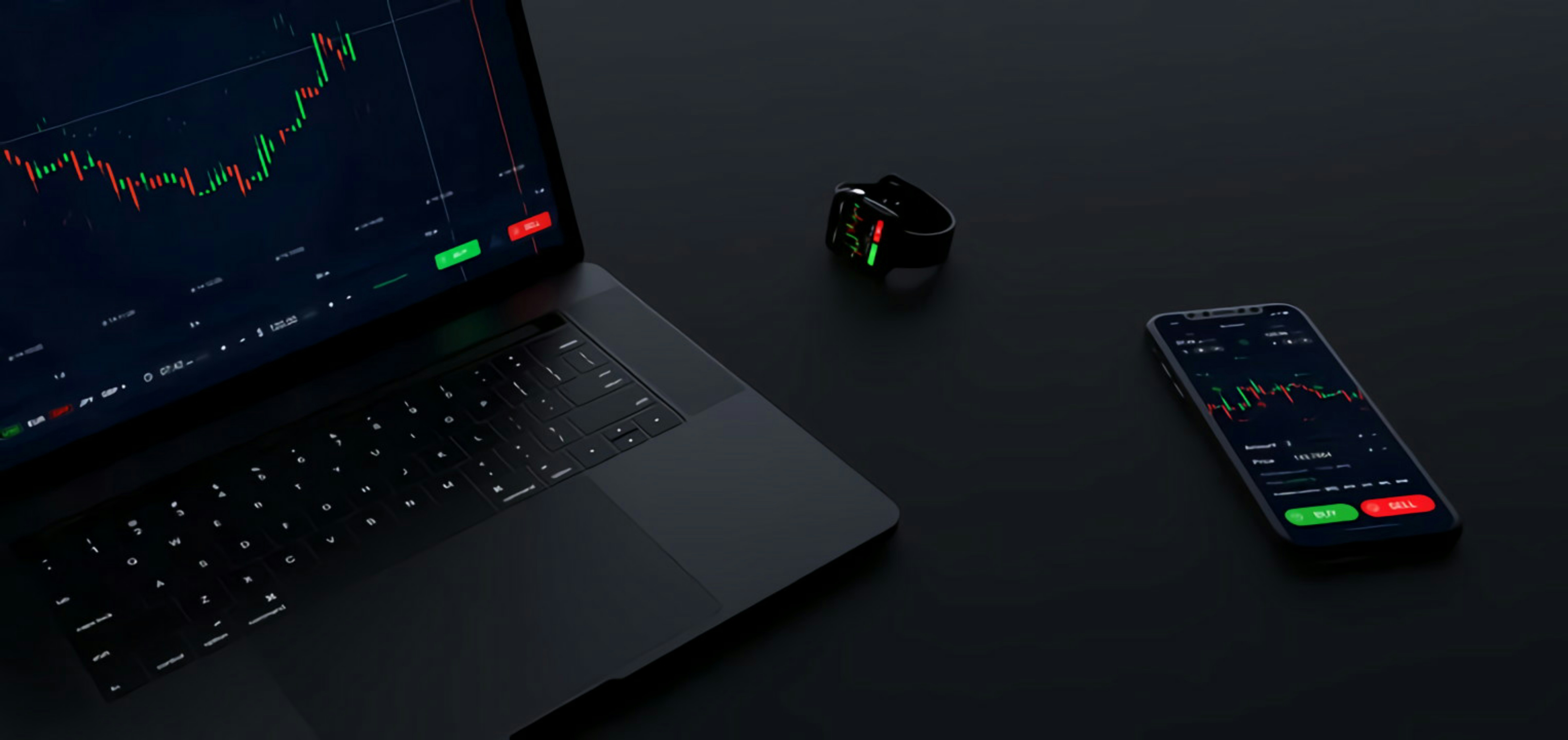
Understanding how crypto trading bots work removes a lot of the mystery around automated trading. A trading bot is not a mysterious money machine or a secret prediction engine. It is a piece of software that runs a loop: it reads market data, checks that data against a set of rules you defined, and places orders when the rules say to. Strip away the jargon and every bot, however sophisticated, comes down to that simple cycle repeating over and over.
The core loop: data in, logic, orders out
At the heart of every trading bot is a continuous loop. First, the bot pulls in market data — prices, recent price history, and whatever other inputs its strategy needs. This is the raw material it reasons about, and it refreshes constantly so the bot is always working from a current picture of the market.
Next comes the logic. The bot evaluates the incoming data against its rules. Has the entry condition been met? Is an open position hitting its exit criteria? Should the size of the next trade change based on current conditions? These checks are just the strategy's logic expressed in code, applied mechanically to whatever the data currently shows.
Finally, when a rule is satisfied, the bot acts. It sends an order to the exchange to open or close a position, then returns to the top of the loop and starts again. That is genuinely all there is to how crypto trading bots work at the mechanical level: read, decide, act, repeat, thousands of times, without fatigue and without emotion.
Signals, execution, and risk controls
It helps to separate a bot into three jobs, because a weakness in any one of them undermines the whole. The first job is signal generation: deciding what the market is doing and whether that warrants action. This is where the strategy's actual edge lives, the reasoning about when a trade makes sense.
The second job is execution: turning a decision into a real order at a real venue. A bot has to place orders reliably and handle the practical details of interacting with an exchange. On Hyperliquid, an on-chain order book, execution happens in a transparent environment where the bot's orders route directly to the market.
The third job is risk control. A sensible bot doesn't just decide when to enter; it manages how much to risk and when to get out, whether a trade is going well or badly. Position limits, stops, and exit rules are what keep a single bad run from doing outsized damage. A bot with sharp signals but no risk discipline is a fragile thing.
What a bot cannot do
Bots are powerful, but it's important to be honest about their limits. A bot cannot know the future. It reacts to conditions using rules written in advance, which means it can only respond to what has already been defined; a market situation nobody anticipated is one the bot has no rule for. Automation delivers consistency, not foresight.